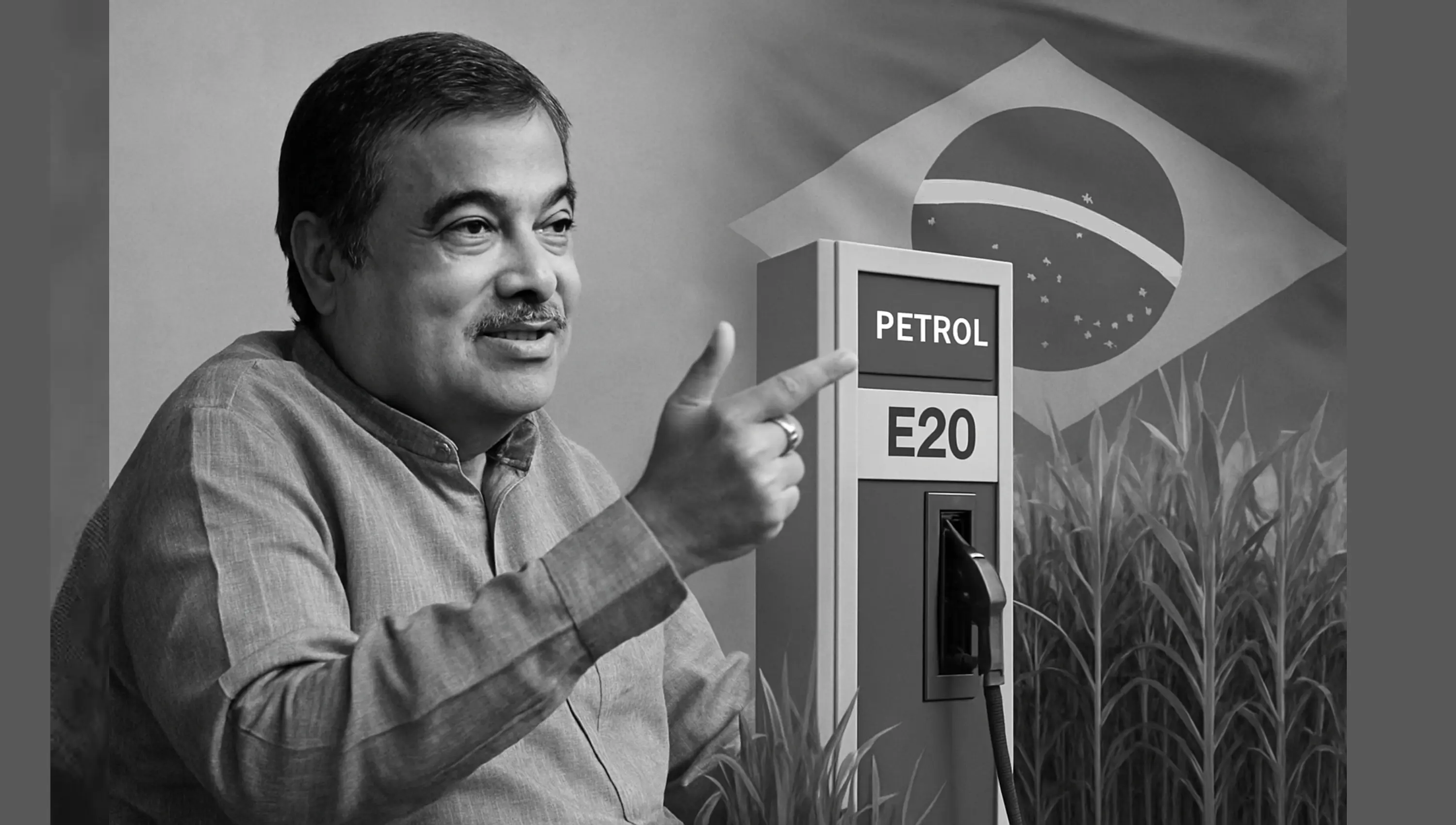
In a landmark decision that could reshape India’s energy landscape forever, the Supreme Court of India on September 1, 2025, firmly rejected a public interest litigation challenging the government’s nationwide rollout of E20 petrol – a blend containing 20% ethanol and 80% petrol. This ruling has effectively sealed the fate of nearly 90,000 petrol stations across the country, marking a pivotal moment in India’s journey toward energy independence and environmental sustainability.
The controversy surrounding this fuel transition has sparked heated debates, social media outrage, and even street protests. Yet, beneath the surface tensions lies a story of ambitious national transformation that could save India billions in foreign exchange while positioning the country as a leader in clean energy innovation.
What is E20 Petrol and Why Does It Matter?
E20 petrol represents a revolutionary blend of 20% ethanol and 80% conventional petrol. Ethanol, chemically known as CH3CH2OH, is a clear, colorless liquid derived from renewable biological materials including wheat, maize, sugarcane, and other agricultural feedstocks. Unlike traditional fossil fuels, ethanol contains oxygen molecules that significantly improve fuel combustion, leading to more complete burning and reduced emissions of harmful pollutants like carbon dioxide and carbon monoxide.
The strategic importance of E20 cannot be overstated. India, currently the world’s third-largest crude oil importer, spends a staggering $137 billion annually on importing 234 million tonnes of crude oil. This massive financial outflow represents one of the country’s largest economic vulnerabilities, making energy independence not just an environmental goal but a critical national security imperative, especially now when the world’s politics has become more volatile with trail of wars and sanctions.
The ethanol used in India’s E20 program comes primarily from three sources: sugarcane juice and molasses (84%), surplus rice from government stockpiles (11%), and other damaged grains including maize (6%). This diversified sourcing strategy ensures supply stability while providing additional income streams for farmers across the country.
The Great E20 Controversy: Public Panic and Political Pushback
The nationwide rollout of E20 fuel has triggered unprecedented public anxiety among vehicle owners, particularly those with older cars. Social media platforms have been flooded with complaints about reduced mileage, engine damage fears, and rising maintenance costs. The controversy reached such heights that multiple petitions were filed in the Supreme Court, seeking to halt the program entirely.
Minister for Road Transport and Highways Nitin Gadkari didn’t mince words when addressing these concerns, calling the social media outrage a “political conspiracy” potentially fueled by petroleum lobbies seeking to protect their interests. The Automotive Research Association of India (ARAI) has conducted extensive testing and certified that E20 fuel causes no adverse effects on vehicle components, yet public skepticism persists.
However, Government think tank Niti Aayog in its 2021 report on ‘Roadmap For Ethanol Blending in India 2020-25’ had recommended that “for better acceptability of higher ethanol blends in the country, retail price of such fuels should be lower than normal petrol to compensate for the reduction in calorific value and incentivise switching to the blended fuel. Tax breaks on ethanol as a fuel may be considered by the govt”. Also, The report had highlighted that while using E20 fuel, there would be a drop in fuel efficiency by nearly 6%-7% for four-wheelers and 3%-4% for two-wheelers designed for E0 (100% petrol) and calibrated for E10, and 1%-2% for four-wheelers designed for E10 and calibrated for E20. “However, with the modifications in engines (hardware and tuning), loss in efficiency due to blended fuel can be reduced,”
The Economics of E20: Why Prices Haven’t Dropped
One of the most contentious issues surrounding E20 has been the absence of price reductions despite NITI Aayog’s 2021 recommendation that ethanol-blended fuels should be priced lower than regular petrol to compensate for reduced calorific value.
The reality has proven more complex. In 2020-21, when the NITI Aayog report was prepared, ethanol was indeed cheaper than petrol. However, market dynamics have shifted dramatically. As per a briefing by Press Information Bureau, the nodal agency of government of India “Currently, the average procurement cost of Ethanol for Ethanol Supply Year 2024-25, as on 31.07.2025, is Rs.71.32 per liter, inclusive of transportation and GST. For producing E20, OMCs blend 20% of this procured Ethanol with Motor Spirit (MS). Price of C-heavy molasses based Ethanol increased from Rs.46.66 (ESY 2021-22) to Rs.57.97 (ESY 2024-25). Price of Maize-based Ethanol increased from Rs.52.92 to Rs.71.86 over the same period. “
Brazil’s Success Story: A Model for India
Brazil, which is now the world’s largest ethanol exporter, was among the first countries to embark on this path. The Brazilian government’s approach was methodical and comprehensive, providing three crucial initial motivators:
- Guaranteed purchases by state-owned Petrobras,
- Low-interest loans for ethanol producers,
- Fixed pricing where ethanol sold for 59% of gasoline prices .
In response to escalating international oil prices and the oil crisis of the 1970s, the Brazilian government established a comprehensive working group.This collaborative body was tasked with developing a strategic program designed to enhance both the production and utilization of ethanol as a fuel source, with the overarching objective of securing national energy independence.
The outcome of this initiative was the National Ethanol Program (Programa Nacional do Álcool – Proálcool), which was officially launched in 1975. Proálcool was strategically designed to expand ethanol production from sugarcane, with the specific aim of blending it with gasoline to serve as an alternative energy source to petroleum-based fuels. To ensure the program’s success, the government implemented a comprehensive support system that included subsidies, financial incentives, and tax breaks, all aimed at reducing production costs and enhancing ethanol’s competitive position in the energy market.
Following another international oil crisis later in the 1970s, the Brazilian government made a pivotal strategic decision to transform the focus of Proálcool’s second phase. The program shifted from producing ethanol primarily as a gasoline additive (anhydrous ethanol) to developing it as a complete, standalone fuel (hydrous ethanol) for direct use in vehicles equipped with specially designed engines. This transition culminated in 1979 with the launch of Brazil’s first commercial neat ethanol-powered automobile.
The program achieved remarkable success throughout the 1980s, when the majority of vehicles sold in Brazil were ethanol-fueled models. The initiative reached its peak performance in 1986, when a record-breaking 700,000 ethanol-powered vehicles were licensed, while ethanol production soared to 12.3 billion litres—representing a three-fold increase compared to 1976 production levels. Brazil has been successfully running on E27 for years now.
India’s Energy Trajectory: Charting the Path
India launched its Ethanol Blended Petrol (EBP) Program in January 2003, which was a significant step forward after pilot projects in 2001. Progress although initially slow but gained considerable momentum, especially over the last decade. By October 2024, India achieved a milestone of 15% ethanol blending, a substantial increase from 1.53% in 2014, and has advanced its target to achieve 20% blending by 2025.
In August 2024, The Union Cabinet, chaired by Prime Minister Shri Narendra Modi, approved the modified Pradhan Mantri JI-VAN Yojana to keep pace with the latest developments in biofuels and attract more investment. Timeline for implementation was extended by five years, until 2028-29, and expands its scope to include advanced biofuels produced from lignocellulosic feedstocks, such as agricultural and forestry residues, industrial waste, synthesis (syn) gas, and algae. The government reduced GST to 5% and facilitated seamless interstate ethanol movement.
In March 2024, The government owned Indian Oil launched ETHANOL 100, a revolutionary fuel containing 90-92% ethanol, available at select retail outlets .The government’s vision extends beyond passenger vehicles. Plans are underway to introduce biofuel blending (10 %) in the diesel-guzzling construction equipment sector, which consumes 3-4% of India’s annual 91 million tonnes of diesel. This could revolutionize fuel consumption in heavy machinery, cranes, bulldozers, and other construction equipment.
Meanwhile, Hindustan Petroleum Corporation Limited (HPCL) has begun testing E27 fuel on vehicle fleets to study emissions and performance effects, suggesting even higher ethanol blends may be on the horizon.
Steering Toward an Uncertain but Promising Future
As India’s E20 revolution unfolds, the nation stands at a crossroads between energy independence and public acceptance. Success ultimately depends on addressing genuine consumer concerns while maintaining the program’s ambitious timeline.
The next 12-18 months will be critical in determining whether India’s bold ethanol experiment becomes a global success story or faces significant implementation challenges. The lessons learned will undoubtedly influence energy policy decisions across the developing world. As we navigate this transition, the choices made today will determine whether future generations inherit an energy-secure India or remain dependent on volatile global oil markets. The road ahead may be uncertain, but one thing is clear: India’s energy landscape will never be the same again.