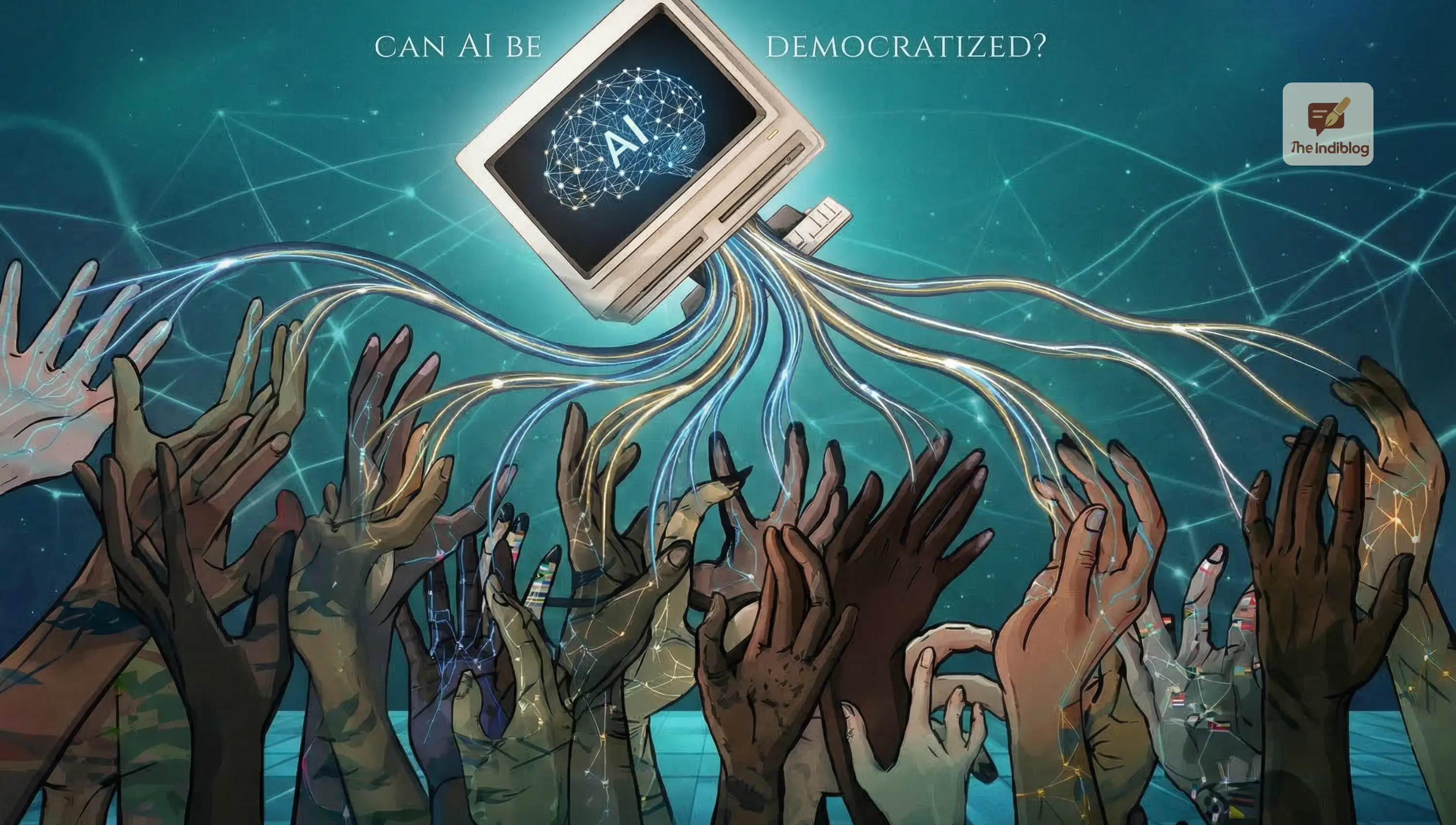
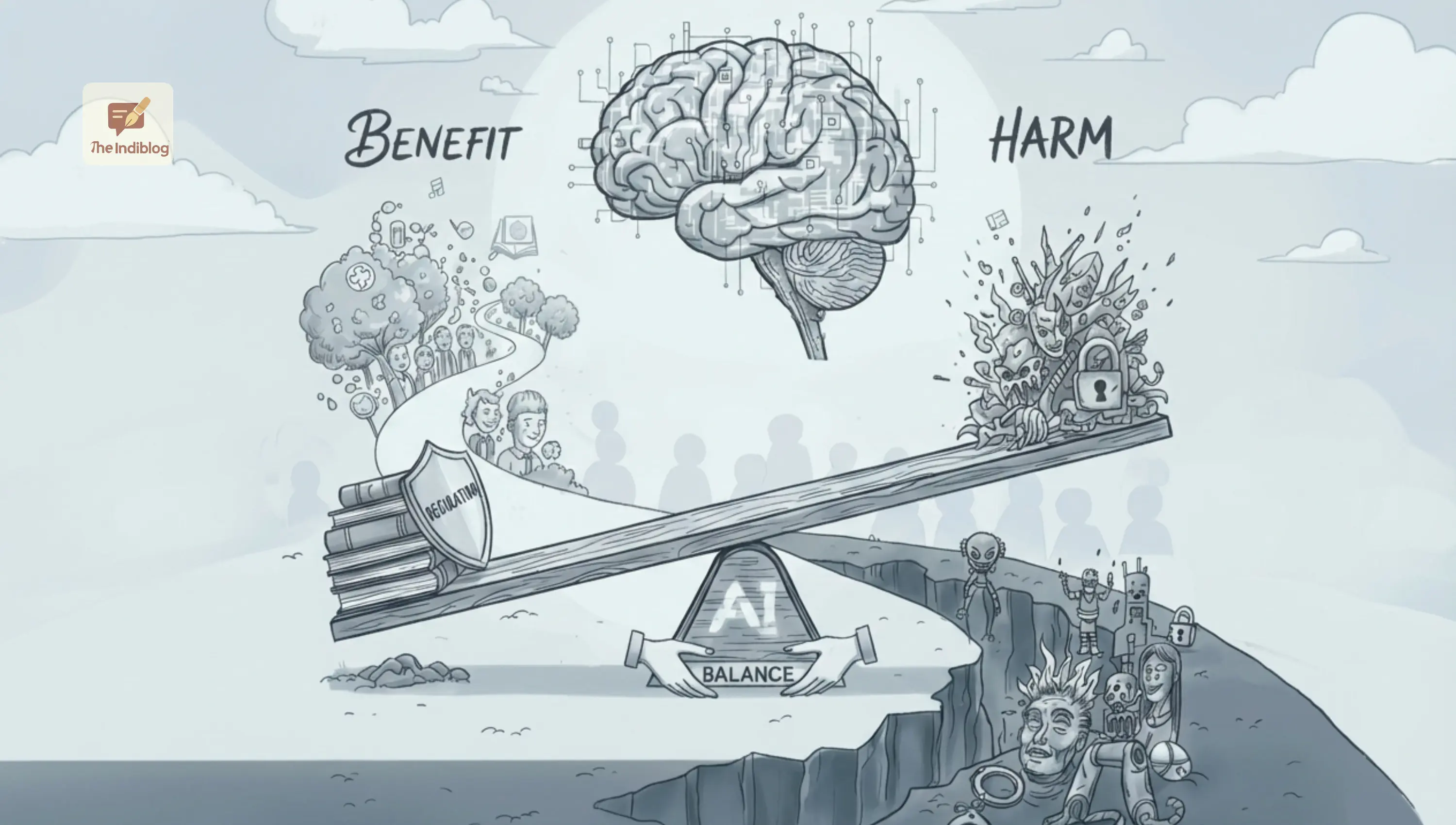
As we conclude the India AI Impact Summit 2026 inside shimmering glass facade of Bharat Mandapam, a deeper question looms – Can Artificial Intelligence be democratized, or are we merely building a more sophisticated version of digital feudalism?
To the casual observer, AI is a magic trick – a chatbot that writes poetry or a car that parks itself. But to the architects gathered here, AI is the new “Pax Silica.” It is the most potent lever of power human history has ever known. Yet, as Prime Minister Narendra Modi noted in his opening keynote, “The real question is not what AI can do in the future, but what humanity chooses to do with AI in the present.“
The Silent Participants: The Invisible War Of The GPUs
Before we talk about democratization, we must talk about the ink in which this new history is being written. We often discuss the models – the GPT, the Gemini, the Bhashini – but we rarely talk about the silent participants who run the processing.
The harsh reality of 2026 is that the AI War is currently being won in the foundries, not the coding labs. Nvidia remains the undisputed king of this realm, commanding a staggering 85% of the global GPU market share. While competitors like AMD have clawed their way to a respectable 7% and Qualcomm attempts to disrupt the lower-end mobile AI market, the industry remains precariously close to a monopoly.
Every time a developer in a small Indian village, dreams of a new AI solution, they are essentially renting a piece of Jensen Huang‘s empire. As the Nvidia CEO famously stated in a recent interview, “It’s very clear that AI is going to impact every industry. I think that every nation needs to make sure that AI is a part of their national strategy. Every country will be impacted.” But if one company controls the national strategy of a hundred nations, is that democratization? Or is it a global tax on innovation? The concentration of compute power is the first and most significant barrier to making AI a public good.
Data Center: The Physical Home Of Intelligence
If GPUs are the engines, data centers are the temples where they are housed. As we demand more AI, we demand more cooling, more space, and more power. India is currently witnessing a data center explosion, with capacity projected to hit 2 GW (Gigawatts) by the end of 2026, doubling from just a few years ago.
In this race, global giants like Equinix have established a dominant foothold, particularly in the Navi Mumbai corridor (west India region), which now accounts for nearly 44% of India’s market share. They are joined by titans like NTT, AdaniConneX, and local pioneers like CtrlS, which is rapidly expanding its hyperscale footprint.
While this infrastructure boom is a sign of India’s digital maturity, it raises a thorny issue. If the physical home of our data is owned by a handful of dominant players, the democratization of the results becomes a logistical challenge. We are building the infrastructure of the future, but we must ensure the keys aren’t held by a private elite. The shift toward edge computing i.e processing data locally rather than in a massive, centralized hub is the only way to truly distribute the benefits of AI to the Next Billion.
The Shift From Silicon Valley To The Grassroots Workforce
AI reach was for a long time confined to the Silicon Valley bubble—a world of high salaries, venture capital, and a somewhat detached view of global problems.
However, 2026 marks the year the center of gravity shifted. India now boasts an AI skill penetration that is 2.5 times greater than the global average. We are no longer just the back office of the world; we are the laboratory. The AI workforce is transitioning from a specialized priesthood of PhDs to a mass movement of prompt engineers and domain specialists in cities like Bengaluru, Hyderabad, and even Tier-2 hubs like Indore and Kochi.
True democratization happens when a farmer in a remote place of Bengal can use a voice-activated AI tool in their local dialect to predict crop cycles, without needing to know a single line of Python. This is where India’s Digital Public Infrastructure (DPI) model shines. By treating computing as a public good, much like we did with UPI for payments, we are beginning to bridge the gap between the Valley and the Village.
The Delhi Declaration: A Blueprint for the Global South
The India AI Impact Summit 2026 was more than just a talk shop. It was a statement of intent. Organized by the Ministry of Electronics and Information Technology (MeitY) and IndiaAI, the summit saw participation from over 30 countries, representing a unified voice for the Global South.
The summit revolved around the M.A.N.A.V. Vision (Moral, Accountable, National Sovereignty, Accessible, and Valid). Key highlights included:
- The AIKosh Initiative: A national repository of 7,500+ datasets and 273 models made available as shared national resources.
- Affordable Compute: The government’s move to provide GPU access at rates as low as ₹65 per hour for startups and researchers – a direct strike against the high-cost barriers of the GPU monopoly.
- Pax Silica Membership: India formally joining the US-led initiative to build secure, trusted semiconductor supply chains.
- Guinness World Record: Over 250,946 pledges for an AI responsibility campaign were signed in 24 hours, turning “Responsible AI” into a national mantra.
The deals signed during these two days ranging from joint ventures in Agentic AI to multilateral agreements on Sovereign AI suggest that the world is looking for an alternative to the ‘winner-takes-all’ model of the West.
The Future: Distributed For The Common Good
So, can AI be democratized?
If democratization means everyone having their own ChatGPT, then we are already there. But if democratization means the equitable distribution of the power to create, then the journey has just begun.
The future of AI must be an open source. We cannot allow the foundational models of human knowledge to be proprietary secrets locked behind a paywall. The success of the India AI Impact Summit lies in its rejection of the alarmist narrative. Instead of fearing AI, the summit embraced a ‘People, Planet, and Progress’ approach.
We are moving toward a world where AI is not a distant god but a local utility. We see it in the Tata AI Sakhi program, where rural women are using smartphones to navigate government schemes in their own languages. We see it in the YUVAi innovators – teenagers from small towns solving real-world problems with AI.
IMF Managing Director Kristalina Georgieva, who attended the summit rightly said: “One job with AI creates 1.3 jobs in total employment.“ The math is clear, but the mission is moral.
AI will only be democratized when it is no longer a technology we talk about, but a capability we take for granted like electricity or water. India has laid down the action plan. Now, the rest of the world must decide if it is ready to share the sky.
The summit is over, the leaders have flown home, but the ‘Delhi Declaration’ remains on the table: a promise that the future of intelligence will belong to the many, not the few.