Shurobhito (fragrant) antiseptic cream, Boroline – that’s how crisp, encapsulated marketing looks like. The consumer gets the use, gets to know the name and its property. This simple yet powerful positioning has made Boroline not just a product, but a cultural phenomenon that has endured for nearly a century.
The Genesis: Born from the Swadeshi Spirit
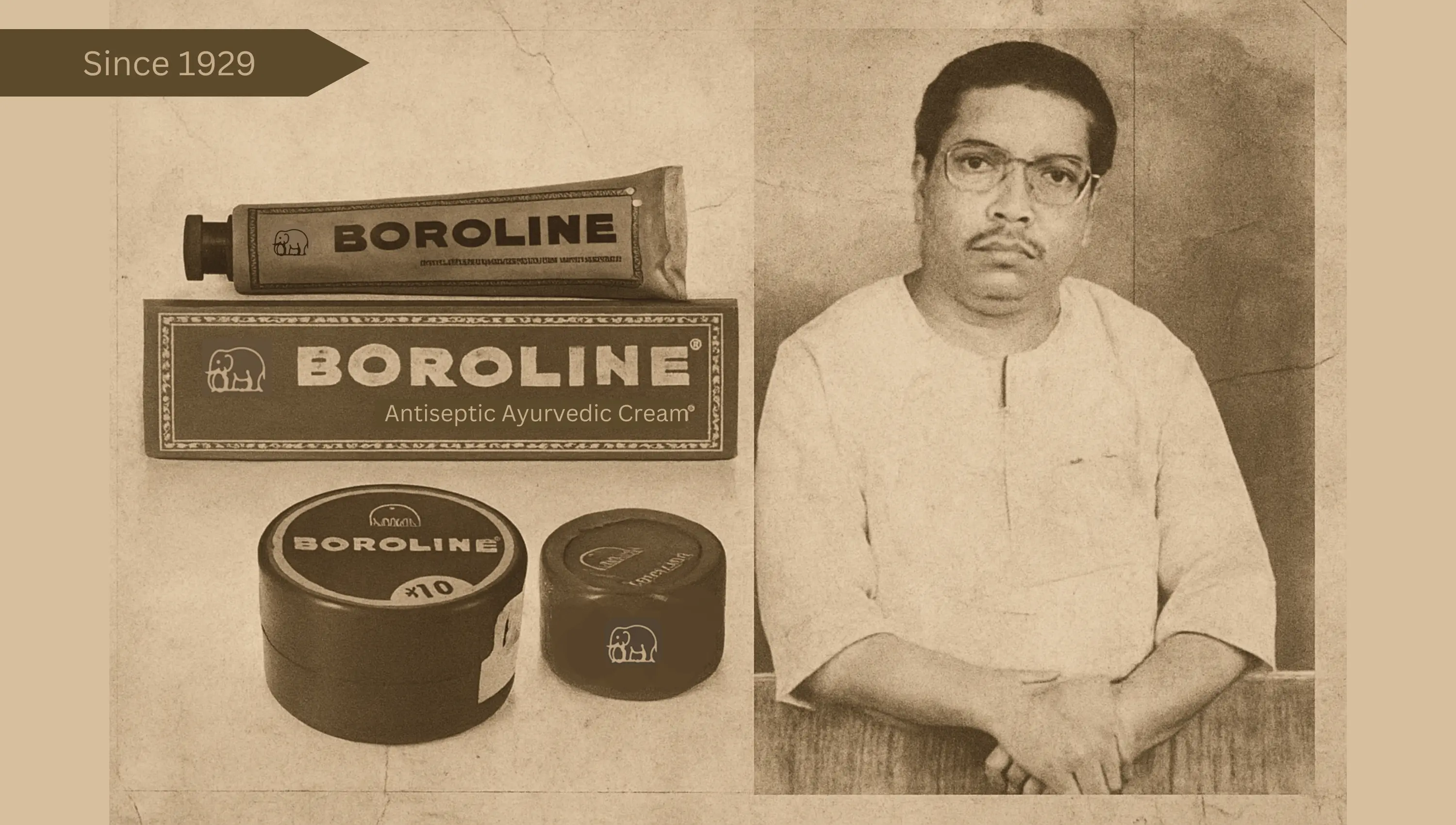
Boroline – a product that transformed into an iconic brand. Started in 1929 by Gourmohan Dutta’s G.D. Pharmaceuticals, Boroline emerged as a direct result of the Swadeshi movement, years before people imagined “Make in India.” This antiseptic cream came a long way, imprinting its image across the country as India’s first indigenous antiseptic cream.
The name “Boroline” itself tells a story – derived from “boro” (short for boric acid) and “oline” from the Latin “oleum” (meaning oil). Even before niacinamide and AHA started storming the Indian market with targeted needs, Gourmohan invented a simple yet effective solution with just Boric Acid, Zinc Oxide, and Lanolin beautifully packaged into a distinctive green tube.
Strategic Simplicity: The Marketing Masterstroke
Dutta strategically marketed Boroline as a reflection of Bengali culture, tapping into nationalistic sentiments. The packaging featured an elephant logo symbolizing strength and prosperity. This created an instant visual identity that transcended literacy barriers – among the Indian consumer base, which was majorly illiterate, it was identified as the ‘hathimarka‘ (elephant) cream.
The aim was simple: to protect every Indian’s skin without digging a hole in the pocket. By the time India achieved independence, Boroline was already a popular product among the masses. In fact, to celebrate Indian independence on August 15, 1947, an estimated 1,00,000 Boroline tubes were distributed for free, which struck the chord of joy of independence, binding the entire country and the brand in the same string. A case of emotional marketing at its finest.
Building Brand Loyalty Through Generations
With time, Boroline slowly became an integral part of Indian households, healing cracks, wounds, and keeping skin softer. The same composition, same green packaging, and same simple elephant logo created a consistency that built trust across generations. This multi-generational appeal has been one of Boroline’s most remarkable achievements, with the brand finding relevance from Boomers to Millennials to Gen Z without alienating its established customer base.
The brand’s early marketing strategy was built on word-of-mouth recommendations rather than flashy advertising. One of their popular slogans was “Ek Maike Sabka Maika,” which means “A mother’s solution for everyone,” creating an emotional appeal that helped Boroline connect with people across generations.
Weathering the Storm: Competition and Resilience
The real challenge came when the Indian market opened to foreign brands in the 1990s. The influx of brands like Nivea and Vaseline, which offered lighter, better-smelling creams, instantly attracted the young generation. Although Boroline had a loyal consumer base, it faced significant challenges from these international competitors offering specialized skincare products.
However, Boroline demonstrated remarkable brand resilience. The brand faced its most critical test when production was stalled for two years in the early 1990s due to statutory pricing orders that made every tube sold a loss-making proposition. Boroline disappeared from retail shelves completely during this period, yet when it returned after the two-year hiatus, it was greeted by consumers “with an emotion reserved for welcoming a long lost friend,” and sales doubled in no time.
Strategic Revival: Adaptation Without Compromise
Rather than making major pivots or trying to catch up in the race, Boroline steadily steered through the market challenges. The brand restructured its positioning slightly, portraying itself as an all-season, all-day cream instead of just an antiseptic cream. They introduced pocket-sized Boroline containers priced at ₹10 to improve accessibility and convenience.
The brand also embraced celebrity endorsements, but with authenticity at its core. Raima Sen was signed as the first brand endorser after the company discovered in a magazine interview that she listed Boroline among five personal care products she couldn’t do without – making her a genuine user rather than just a paid spokesperson. The brand had previously featured Swaroop Sampat when she won the Miss India title, representing the modern woman of those times.
Market Performance and Financial Success
Today, Boroline commands impressive market statistics. The brand enjoys a 21% market share in the OTC antiseptic cream market, which has an annual sale of 2.8 million liters valued at more than ₹180 crore (US$ 37.50 million). The brand maintains a dealer penetration of 34.20% and directly services more than 300,000 retail outlets across the country.
Boroline accounts for over 60% of G.D. Pharmaceuticals‘ revenue as of 2016, demonstrating the brand’s continued financial significance to its parent company. The company invests 5% of its annual earnings in research and development, leading to enhanced production technologies and operational efficiencies.
Digital Age Renaissance: Gen Z Rediscovery
In an interesting turn of events, Gen Z is now rediscovering Boroline and adding it to their skincare routines. This resurgence aligns with the growing popularity of natural and traditional skincare, with data showing that 44% of Gen Z consumers want ‘natural’ products. Social media influencers are promoting Boroline as an “age-old remedy” and “pharmacy-affordable product” for its multiple benefits, particularly for hyperpigmentation and acne scars.
Product Diversification and Future Growth
With growing demand and the changing landscape of the consumer base in India, G.D. Pharmaceuticals has infused a few more products into its portfolio, including antiseptic lotions like Suthol, and lighter creams and soaps. However, even today, the largest section of profit comes from Boroline itself, testament to the enduring appeal of the original formulation.
Boroline’s 95-year journey offers invaluable lessons in brand building, resilience, and authentic marketing. In an era where brands constantly reinvent themselves chasing trends, Boroline’s success lies in its unwavering consistency and genuine value proposition. The brand teaches us that authenticity, affordability, and effectiveness can triumph over flashy marketing campaigns and constant product pivots.
In today’s world of rapid digital transformation and global competition, can today’s brand identify and leverage its unique “Boroline moments” – those authentic connections and consistent value propositions that create lasting consumer relationships? What would it look like to compete not by being everything to everyone, but by being irreplaceably valuable to your core audience? Perhaps it’s time to learn from the green tube that have been quietly healing India’s skin for nearly a century – sometimes, the most powerful marketing strategy is simply delivering on your promise, one satisfied customer at a time.