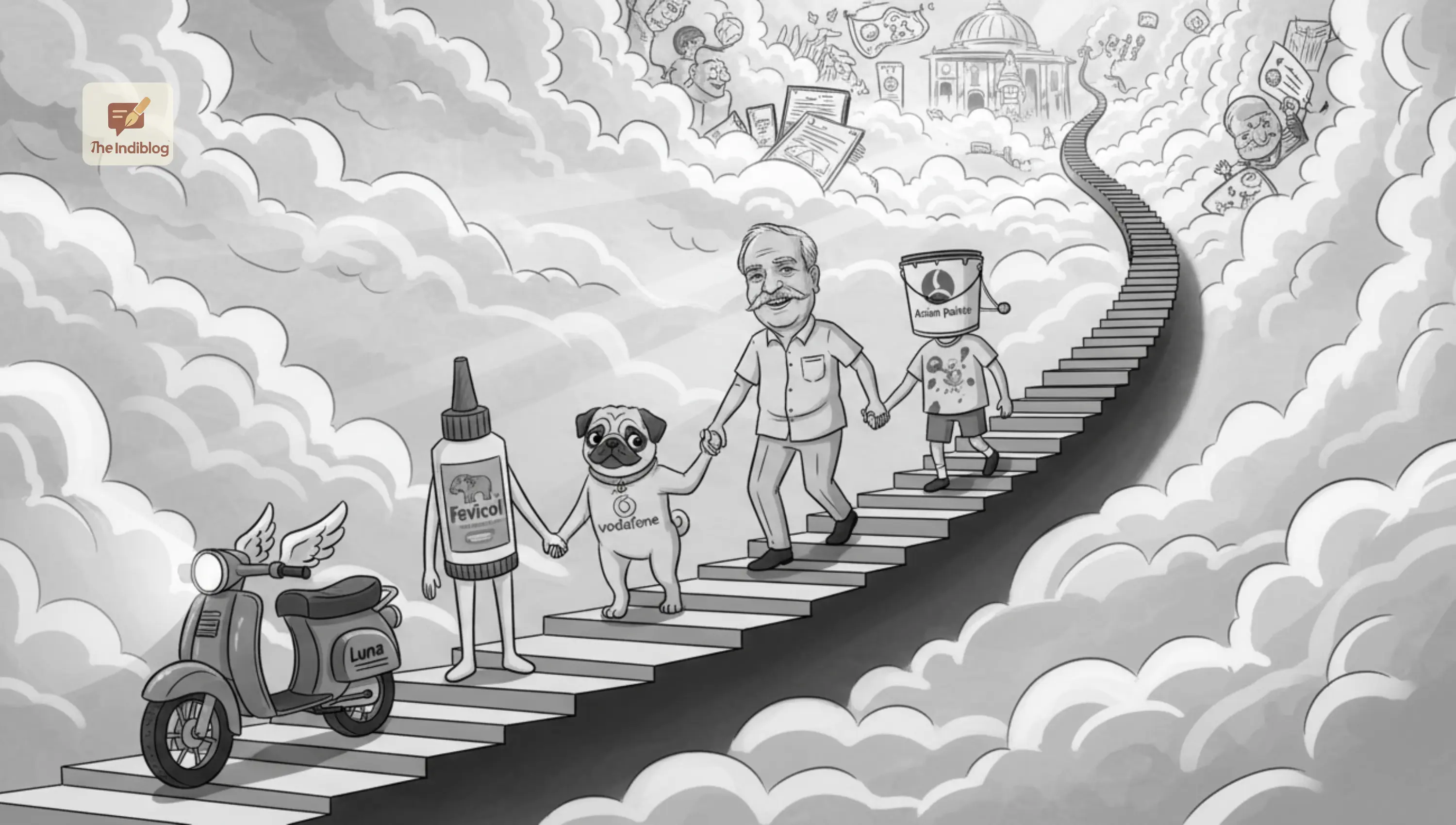
When television sets flickered to life across millions of Indian homes during the 1982 Asian Games, few could have predicted that a young history graduate from St. Stephen’s College would reshape how brands spoke to this newly connected nation. Piyush Pandey, who passed away recently on 24th October, 2025, didn’t just create advertisements—he architected a revolution in how India saw itself reflected in commercial storytelling.
Fresh from his master’s degree in history, Pandey joined Ogilvy as a client servicing executive in 1982, stepping into an advertising landscape dominated by borrowed ideas and Western templates. The industry spoke in clipped English accents, sold dreams that felt foreign, and treated consumers as demographics rather than neighbours. Pandey sensed the disconnect immediately. His academic training in history had taught him something marketers often forgot: stories endure when they belong to the people who live them.
The Philosophy Of Emotional Authenticity
Pandey’s approach to advertising rested on a deceptively simple foundation—emotion always trumps explanation. While his contemporaries crafted elaborate product demonstrations and technical specifications, Pandey asked different questions: What does this brand mean in a grandmother’s kitchen? How does it sound in a college hostel conversation? What memory does it create at a railway platform?
This philosophy first crystallized in the iconic Fevicol campaigns. Where conventional wisdom dictated showcasing adhesive strength through lab tests and certificates, Pandey saw something deeper. First aired in 1996 with the iconic Hen ad, but gained recognition with the 2002 “bus” ad, which later won Silver Lion at the Cannes Lions festival. The 2002 Fevicol ad featured a rickety bus overloaded with passengers clinging to its roof and sides, defying gravity through sheer collective determination. Not a drop of glue appeared on screen, yet the tagline “Fevicol ka Mazboot Jod hai, Tootega Nahi” embedded itself into India’s cultural vocabulary. The campaign didn’t explain bonding strength; it embodied the spirit of resilience, togetherness, and that uniquely Indian ability to make impossible situations work. Decades later, the phrase lives in wedding speeches, political commentary, and everyday conversations—proof that Pandey understood brands become culture when they speak the people’s language.
Mining The Cultural Underground
Pandey’s genius lay in recognizing that India’s diversity wasn’t a marketing challenge but its greatest creative asset. He listened—really listened—to how people spoke in tea stalls, what jokes they shared during train journeys, which moments made them pause and smile. His campaigns drew from this vast underground river of lived experience, transforming regional idioms and local humor into national conversations.
The Kinetic Luna campaign exemplified this cultural mining. “Chal Meri Luna” wasn’t selling transportation; it was celebrating the aspirations of middle India. Through vignettes of a perpetually late boyfriend, a diligent government clerk, and an aspiring doctor, Pandey crafted a portrait of everyday India where modest dreams deserved grand respect. The catchphrase “Luna karti pucca vaada, kharcha kam, mazbooti zyada” spoke the language of household budgets and practical wisdom. Luna became more than mobility—it became a trusted companion in millions of life stories. Before production ceased, the brand achieved cumulative sales exceeding 10 million units, a testament to Pandey’s understanding that Indians didn’t buy products; they adopted relationships.
Breaking Category Conventions
Perhaps nothing demonstrates Pandey’s transformative vision more powerfully than his 1993 reimagining of Cadbury Dairy Milk. The chocolate category had calcified into predictable territory—parents rewarding children, festival gifting, celebration sweets. Cadbury faced the challenge of expanding beyond this narrow perception. Most strategists would have conducted focus groups, analyzed consumption patterns, and crafted careful positioning statements.
Pandey chose rebellion. The “Kuch Khaas Hai” campaign featured a young woman spontaneously running onto a cricket field, dancing with uninhibited joy after her boyfriend scored, clutching a Dairy Milk bar. The revolutionary insight wasn’t the dancing or the cricket—it was the permission to be childlike. “Kuch Khaas Hai Zindagi Mein” acknowledged what adults rarely admitted: that the capacity for pure, unfiltered delight doesn’t die with childhood; it just gets buried under responsibilities.
The campaign shattered the perception that chocolate was children’s territory. Adults began buying Dairy Milk not as gifts but for themselves, reclaiming moments of spontaneous pleasure. Pandey had excavated a universal truth: everyone carries an inner child waiting for permission to emerge. The ad became a cultural touchstone, referenced in films, imitated in college festivals, and embedded in the collective memory of a generation.
The Pug Phenomenon
The Vodafone pug campaign, which predated the Zoozoos( during the 2009 Indian Premier League ) and ran during the mid-2000s, became one of India’s most beloved advertising mascots through its sheer simplicity and emotional resonance. Pandey understood that in a cluttered telecom market shouting about tariffs and network coverage, what people craved was connection—not just technological but emotional. The little pug following a boy everywhere wasn’t selling mobile services; it was embodying loyalty, companionship, and the promise that Vodafone would follow you wherever life took you. The jingle “You and I in the beautiful world”, with the tagline “Wherever you go, our network follows” became secondary to the visual storytelling of unconditional devotion. Indians didn’t just remember the ad—they adopted pugs as pets in unprecedented numbers, named their dogs “Hutch” (Vodafone’s previous brand name), and created countless memes and parodies. The campaign demonstrated Pandey’s core belief that brands become cultural phenomena when they tap into universal emotions rather than product features. A telecom company had successfully sold itself not through technical superiority but through the simple, profound idea that being there for someone matters more than being the loudest voice in the room.
Painting Stories On Walls
Asian Paints’ “Har Ghar Kuch Kehta Hai” (Every Home Tells a Story) campaign in around 2002 elevated paint from a functional purchase to emotional investment. Rather than showcasing color charts and durability claims, Pandey’s films explored how homes witness life’s pivotal moments—children’s first steps, family disagreements, reconciliations, celebrations. The paint became the silent custodian of these memories, the canvas where life stories unfolded.
This approach reflected Pandey’s deeper understanding of consumption in Indian households. Major purchases weren’t transactions; they were family decisions weighted with hopes, memories, and future dreams. By honoring this emotional complexity, Asian Paints positioned itself not as a vendor but as a partner in life’s journey. The campaign helped Asian Paints maintain market leadership, but Pandey’s real achievement was elevating an entire category’s conversation.
From Brands To Ballots
When Pandey crafted his first political campaign for the BJP in 2014, he brought the same principles that defined his commercial work. “Ab Ki Baar, Modi Sarkar” became perhaps India’s most recognizable political slogan, demonstrating that Pandey’s mastery of cultural pulse transcended product categories. The slogan’s genius lay in its rhythmic simplicity and inherent hope—a promise of change delivered in words any Indian could remember and repeat.
Shashi Tharoor remembered his “St. Stephen’s College classmate” as a man full of warmth, wit, and life, whose influence went far beyond the world of advertising.
The Times of India named him the most influential person in Indian advertising eight consecutive times. The Padma Shri came in 2016, recognizing his cultural contributions beyond commerce.
The Enduring Legacy
As condolences pour in from across the advertising world and beyond, the void Pandey leaves feels particularly acute in our current moment. Contemporary marketing increasingly worships data analytics, algorithmic targeting, and performance metrics. Campaigns get A/B tested into sterile efficiency. Focus groups smooth every rough edge. Brands speak in careful corporate voices, terrified of offending any micro-segment.
Pandey’s work stands as powerful counterargument. His campaigns remind us that the strongest messages aren’t the loudest but the most honest. That empathy matters more than optimization. That making someone laugh, cry, or nod in recognition creates brand equity no algorithm can replicate. His legacy suggests that as Indians increasingly lead global marketing organizations worldwide, they carry forward a distinctly humanistic approach to commercial storytelling—one that treats audiences as communities, not consumers.
Piyush Pandey didn’t just give Indian advertising its identity; he proved that staying rooted in your culture isn’t parochialism but power. His campaigns linger not despite their Indianness but because of it, teaching a lesson now more urgent than ever: great storytelling doesn’t scroll past—it stays, echoing through generations, whispered in conversations, and remembered long after the last frame fades.