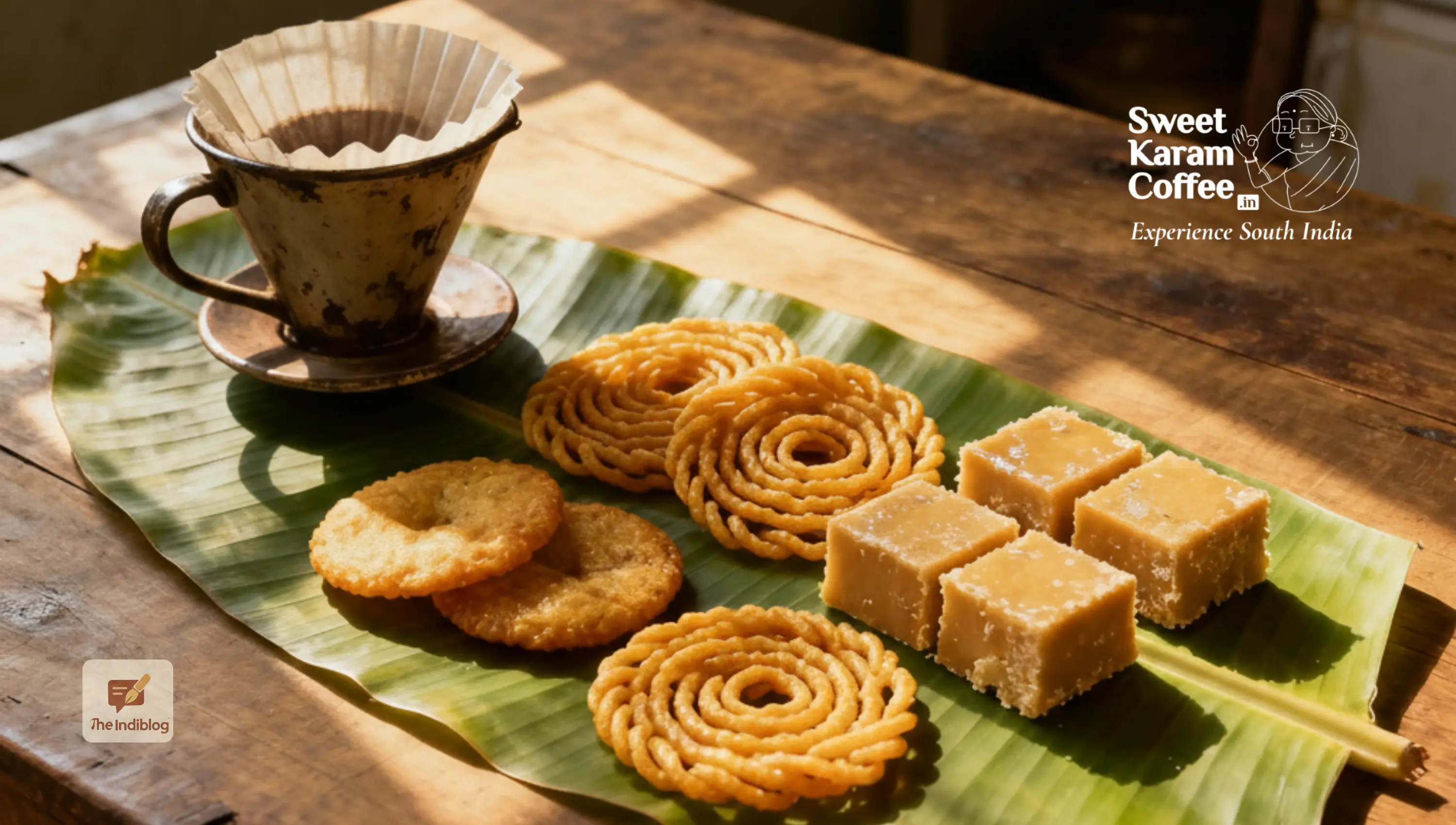
On a rain-soaked Diwali evening in 2015, a family of food enthusiasts found themselves desperately hunting for traditional South Indian snacks—the kind their grandmother used to make with love and care. Despite scouring multiple shops, they couldn’t find authentic bakshanams. That moment of longing transformed into a business idea that would disrupt India’s ₹25,000 crore South Indian snacks and sweets market.
This is the story of Sweet Karam Coffee (SKC), a brand that has turned nostalgia into a thriving business while championing healthy living in an industry dominated by legacy players.
The Birth Of Homegrown Revolution
Founded by Anand Bharadwaj and Nalini Parthiban, Sweet Karam Coffee wasn’t conceived in boardrooms with venture capital backing. It began in a modest home kitchen with just ₹2,000 and the treasured recipes of Janaki Paati, the founders’ grandmother, whose warm presence now graces the brand’s packaging and advertisements. “Every Diwali, our grandmother used to meticulously make the jaangris, murukku and Mysore pak,” recalls Nalini Parthiban, CEO and Co-Founder of SKC. As she was cooking, she used to narrate tales to her grandchildren and make them do odd jobs.
What started as newspaper pamphlet distribution by the founders themselves has evolved into a global brand delivering to over 32 countries and generating revenue, estimated remarkable 4.5x increase from approximately ₹11.1 crore in FY24. The brand recently secured $8 million in Series A funding led by Peak XV Partners and Fireside Ventures in early 2025, propelling its next phase of expansion.
Riding The Wave Of Health-Conscious India
The COVID-19 pandemic fundamentally altered Indian snacking habits, creating unprecedented opportunities for health-focused brands like Sweet Karam Coffee. According to Farmley’s Healthy Snacking Report 2024, based on a survey of over 6,000 Indians, a striking 73% now read ingredient lists and check nutritional values amid growing concerns about food adulteration. The same report reveals that 93% of consumers actively seek healthier snack options despite higher retail costs.
This shift toward mindful eating was amplified by prominent health advocates like Youtuber Vivek Mittal (FitTuber) and Revant Himatsingka (Food Pharmer), who championed clean eating and transparency in food production. India’s healthy snacks market, valued at USD 3.0 billion in 2024, is projected to reach USD 4.6 billion by 2033, exhibiting a CAGR of 5%. Sweet Karam Coffee positioned itself perfectly at this intersection of tradition and wellness.
“Quick commerce is bridging distribution like never before, and we’re seeing a beautiful cross-pollination of cultures—our products are now loved not just in the South, but across the country” stated Nalini Parthiban in a recent statement. “We take pride in having taken a stand against palm oil from the very beginning.“
The Secret Sauce: Product Innovation Meets Tradition
Sweet Karam Coffee’s differentiation lies in its unwavering commitment to clean-label products made without palm oil, preservatives, or maida (refined flour). This resonates deeply with multiple customer segments: health-conscious consumers, busy urban professionals seeking convenient yet traditional options, Gen Z discovering regional recipes for the first time, and nostalgic customers reliving childhood memories.
The brand strategically partnered with Bangalore-based Suite42, a food contract manufacturing and new product development specialist, to strengthen its product formulation and innovation capabilities. This collaboration yielded impressive results—helping SKC achieve 10x growth in just eight months, scaling from ₹7 lakhs to ₹70 lakhs in revenue. Suite42 assisted with critical aspects including chip thickness optimization, frying temperature calibration, seasoning formulations, and overall product development, completing over 20 new product developments for the brand.
“Suite42 helped us a lot with identifying the right manufacturing partners, improving our operations, and optimizing our backend processes” shared Anand Bharadwaj, Co-Founder of Sweet Karam Coffee. “What really stood out was their continuous improvement mindset and hands-on involvement.”
Building A Direct-To-Consumer Powerhouse
Sweet Karam Coffee employs a sophisticated product-led growth strategy anchored in its clean, user-friendly website designed for B2C sales. Health markers like “no maida,” “no preservatives,” and “no palm oil” are prominently displayed, making navigation and purchasing decisions effortless for customers. The brand also leverages personalized customer engagement through customizable snack hampers for special occasions and festivals, fostering loyalty and repeat purchases.
Even the brand name itself is strategic, encompassing its entire product portfolio: “Sweet” represents traditional treats like Mysore Pak, “Karam” (meaning spicy or strong in Tamil) signifies savory chips and snacks, and “Coffee” honors the beloved South Indian filter coffee tradition. This thoughtful naming creates instant recognition and comprehensive brand recall.
The brand’s omnichannel presence has expanded significantly with the explosive growth of quick commerce platforms like Blinkit, Zepto, and Swiggy Instamart. In fiscal 2025, these top quick commerce companies collectively posted advertising revenues exceeding ₹3,000 crore, demonstrating the channel’s commercial viability for D2C brands.
Scaling Operations With Strategic Leadership
To support its ambitious growth trajectory, Sweet Karam Coffee appointed Nandhitha Indermohan, a former Unilever supply chain veteran and ISB alumna, as Chief Operating Officer in March 2025. With over 13 years of experience in supply chain and operations at Unilever, Indermohan brings critical expertise to enhance SKC’s operational efficiency and strategic capabilities during this pivotal expansion phase.
“The South Indian snacks and sweets market, at over ₹25,000 crore, is large, fast-growing, and undergoing a significant transformation,” noted Abhishek Mohan, Principal at Peak XV Partners. “The shift from unorganised to organised players, rising demand for ‘better-for-you’ products, and the rapid expansion of modern distribution channels present a powerful opportunity for brands like Sweet Karam Coffee.“
The brand has experienced 4x revenue growth over the past 12 months and projects an additional 2.5x growth in the coming year, demonstrating sustained momentum in a competitive landscape.
The Road Ahead: Global Aspirations Rooted In Tradition
Sweet Karam Coffee’s journey from a ₹2,000 home kitchen experiment to a multi-crore global brand exemplifies how authenticity, quality, and timing can create category leaders. The brand’s mission to “Take the Taste & Tales of South India to the Globe” resonates with a growing diaspora seeking connection to their cultural roots and health-conscious consumers worldwide discovering regional Indian cuisine.
As India’s snacking market transforms with increasing premiumization and health consciousness, brands that deliver on taste, tradition, and transparency will emerge as winners. Sweet Karam Coffee has demonstrated that combining grandmother’s wisdom with modern business acumen, maintaining uncompromising product standards, leveraging digital and quick commerce channels effectively, and building emotional connections through storytelling creates a sustainable competitive advantage.
The brand’s meteoric rise reflects broader consumer trends—Most Indians are no longer willing to compromise between taste and health, tradition and convenience. In SKC’s case, they don’t have to. With Janaki Paati’s recipes, the founders’ vision, and strong institutional backing, Sweet Karam Coffee is well-positioned to become the global destination for South Indian food, one healthy nostalgic bite at a time.